Public fact sheet
Sudan Rail Group: project at a glance
A Canadian-Sudanese company investing in Sudan's railway future.
In preparation, September 2026. Sudan Rail Group has not yet assumed operating responsibility.
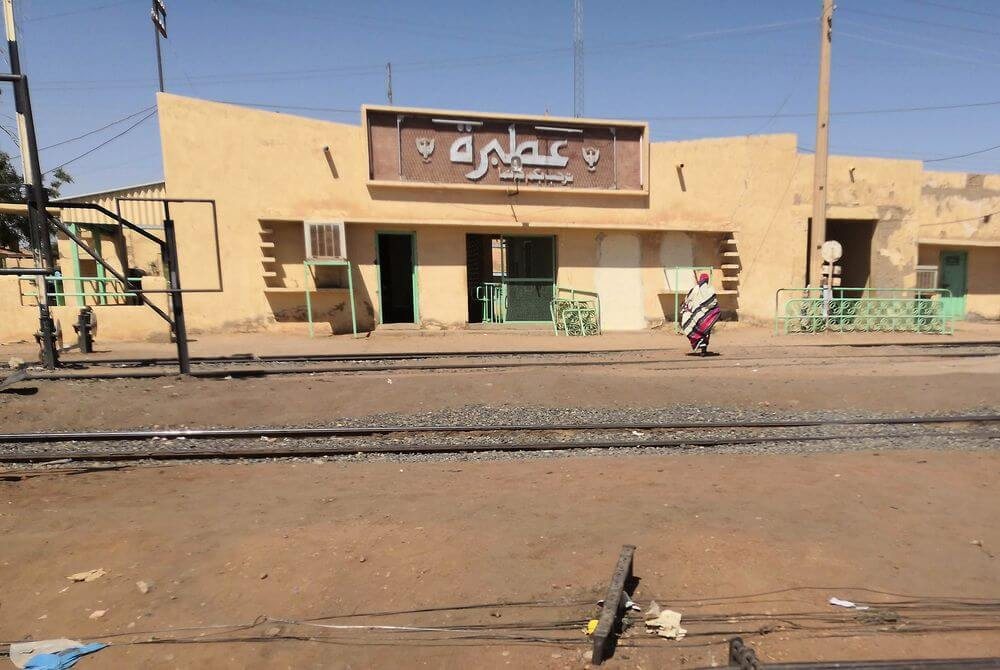
Sudan Rail Group is preparing to rehabilitate and operate the Port Sudan to Khartoum railway under a long-term government concession. The project brings together Sudanese railway knowledge, Canadian experience and international expertise to strengthen freight transport, restore passenger connections and support economic recovery.
The corridor at a glance
1,067
Kilometres, Port Sudan to Khartoum
Planned passenger stops. Trains will serve the same locations in both directions.
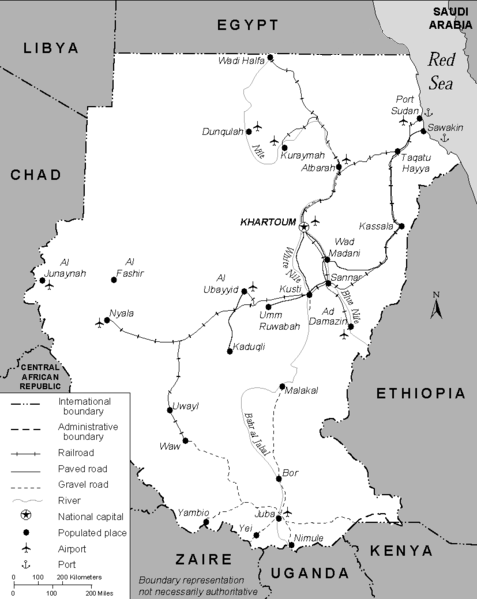
Sudan's transport network in 1991
Sudan's railway, road and river routes as mapped in 1991, before South Sudan became independent in 2011.
Where the project is now
- Current stage
2026
Preparation
Engineering assessments, financing, rehabilitation planning, workforce preparation and service planning.
2027
Operating transition
Sudan Rail Group assumes operating responsibility for the corridor.
2027
Passenger services begin
One departure each week in each direction, after the transition and service preparations.
2028 onward
Growing the service
More frequency and capacity as demand grows and railway capacity allows.
Dates describe the current plan. Confirmed dates will be announced on this website.
Key information
Sudan Rail Group is a Canadian-Sudanese company focused on the rehabilitation, operation and long-term development of Sudan’s railway system.
The company is working on the rehabilitation and operation of the Port Sudan to Khartoum railway corridor, linking Sudan’s principal Red Sea port with the capital and major inland markets.
The corridor forms part of Sudan’s historic national railway network and is intended to support both passenger and freight transportation.
Existing public railway assets remain owned by the Government of Sudan and Sudan Railways Corporation.
The project does not involve the sale of the railway or the transfer of public ownership of the underlying railway assets.
The proposed arrangement is a long-term concession and lease for the rehabilitation and operation of railway services.
It is not a sale of the railway. Public ownership of the infrastructure and core railway assets remains protected.
The planned transition to railway operations is expected to take place in stages, beginning with a period of technical due diligence, asset inspection, workforce planning and operational preparation.
Initial operations are targeted for 2027, subject to the completion of the required approvals, preparations and operating arrangements.
The initial project focuses on the Port Sudan to Khartoum corridor, a route of approximately 1,000 kilometres.
The railway uses Sudan’s established 1,067 millimetre (Cape) gauge.
The corridor connects:
- Port Sudan and the Red Sea
- Haya and eastern Sudan
- Atbara, Sudan’s historic railway centre
- Khartoum and the central Sudanese market
The initial operating target is approximately 1 million tonnes of freight per year.
This would include agricultural products, cement, industrial materials, food and consumer goods, fuel-related cargoes, construction materials and other essential commodities.
As track, bridges, workshops, locomotives and operating systems are progressively restored, the railway could support substantially higher freight volumes. Medium-term planning considers the potential for several million tonnes per year on the main corridor.
A functioning railway can move large volumes of goods using fewer vehicles than road transport.
For Sudan, improved rail freight could:
- Reduce pressure on long-distance roads
- Lower the number of trucks required to move essential goods
- Improve access to Port Sudan for inland markets
- Support agricultural and industrial production
- Reduce vehicle wear and road maintenance requirements
- Provide a more reliable transport option during fuel shortages
- Improve the movement of food, cement, construction materials and other essential goods
At the initial target of 1 million tonnes per year, the railway would be moving the equivalent of many thousands of truckloads annually.
Passenger services are expected to be reintroduced in stages.
The initial service would focus on providing a reliable connection between Khartoum, Atbara, Port Sudan and communities along the corridor.
The objective is to offer an affordable alternative to long-distance bus travel, while improving safety, reliability and access to essential services.
Passenger operations would be expanded as rolling stock, workshops, stations and track infrastructure are restored.
The project is based on a phased rehabilitation model.
Initial work will focus on restoring safe and practical operations, including:
- Track and bridge inspections
- Drainage and earthworks
- Removal of obstructions and vegetation
- Repairs to stations, workshops and railway facilities
- Locomotive and wagon inspections
- Restoration of signalling, communications and operating systems
- Improved railway stores and spare-parts management
- Training and deployment of operating and maintenance teams
The approach is intended to restore useful service progressively rather than waiting for every part of the railway system to be rebuilt at once.
Sudan Railways Corporation has a large body of experienced railway personnel with knowledge of track, locomotives, workshops, operations, signalling, stations and railway administration.
The project is intended to make use of Sudanese railway expertise while adding technical, operational and management support where required.
Training, skills transfer and the development of local management and maintenance capacity are central parts of the proposed operating model.
Railway rehabilitation is expected to create direct and indirect employment in:
- Track and bridge rehabilitation
- Locomotive and wagon maintenance
- Workshop construction and repair
- Station rehabilitation
- Operations and train crew
- Engineering and technical services
- Procurement and logistics
- Security, cleaning and facilities management
- Local construction and support services
The railway can also support economic activity in communities along the corridor by improving access to markets, employment, education, health care and essential goods.
Sudan Rail Group brings together Sudanese railway and business experience with Canadian and international expertise in railway operations, infrastructure, finance, project management, logistics and public transportation.
The objective is to combine local knowledge of Sudan’s railway system and operating environment with international standards for safety, asset management, commercial planning and accountability.
The project is intended to support the restoration of a nationally important public service.
A more reliable railway can contribute to:
- Lower transport costs
- Improved food and commodity distribution
- Better connections between eastern and central Sudan
- Increased access to Port Sudan
- Support for industrial and agricultural activity
- Reduced dependence on road transport
- New employment and training opportunities
- The long-term recovery of Sudan’s railway system
Sudan’s railway was once one of the most important transport systems in Africa and played a central role in connecting the country’s ports, cities, agricultural areas and industrial centres.
The current project is intended to help restore that role through practical rehabilitation, improved management and the gradual return of dependable passenger and freight services.
Sudan Rail Group’s objective is to help rebuild a railway that remains publicly owned, commercially viable, operationally reliable and useful to the people and economy of Sudan.
Find out more
- Email: info@SudanRail.com
- Website: SudanRail.ca
Project information as at September 2026. Confirmed service dates, timetables and booking information will be published on the website.
Reports and documents
Published project reports. These documents are provided for general information; confirmed service and commercial details will be published on this website.
Khartoum Transportation Expansion Options
A review of bus rapid transit and other options for expanding urban transport capacity in Khartoum, prepared as part of the project's transport planning work.
Study for the Redevelopment of Sudan’s Road, Rail and Public Transport Infrastructure Post-War
A study of how Sudan’s road, rail and public transport infrastructure could be rebuilt after the war, covering the damage assessment, governance and financing, the national rail network and the case for an inland dry port at Khartoum.
An Arabic edition of this study will be published here when it is available.
A two-page A4 summary of this page, for printing or sharing.